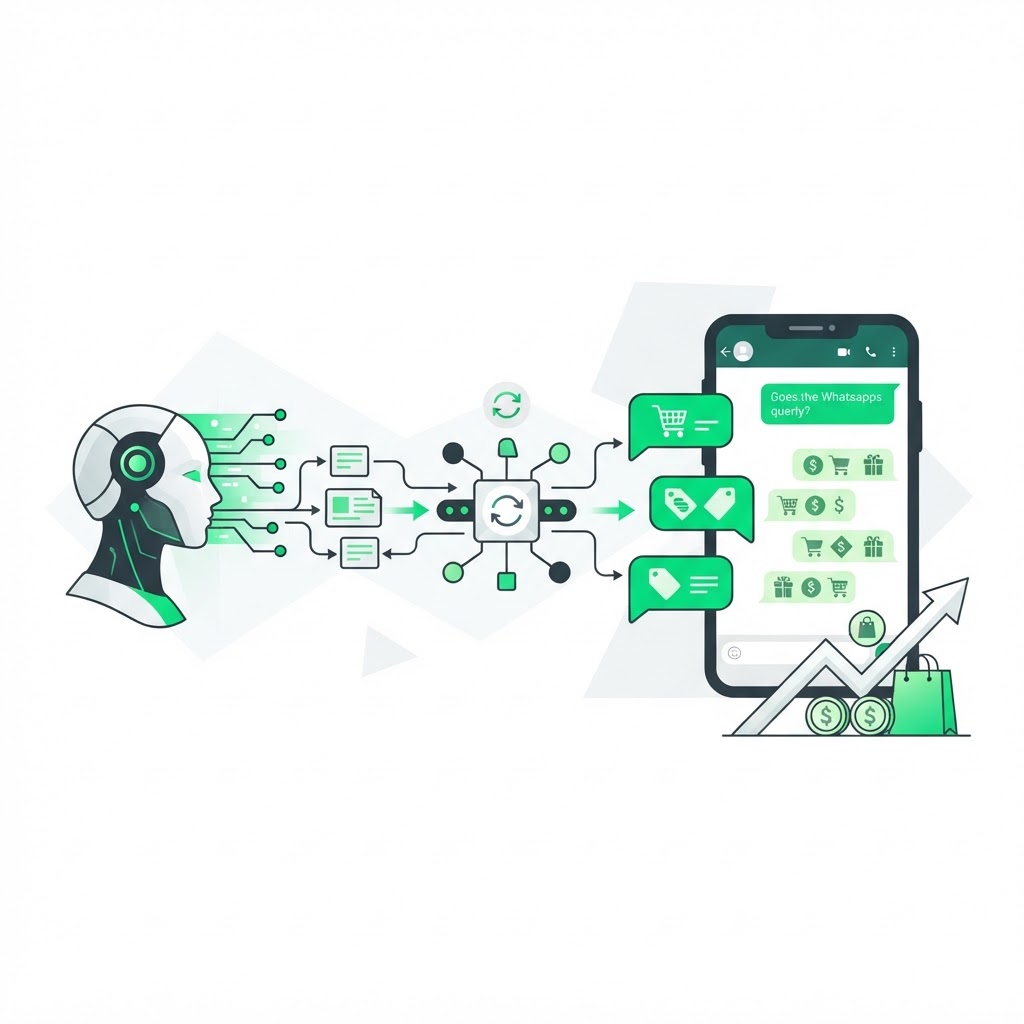
Mastering MCP: Building a WhatsApp Middleware for AI Agents
Mastering MCP: Building a WhatsApp Middleware for AI Agents
In the rapidly evolving landscape of AI-driven commerce, connecting your intelligent agents to the world's most popular messaging platform is no longer optional. As developers, you need a robust, scalable way to integrate AI logic with WhatsApp. This is where the Model Context Protocol (MCP) comes into play.
Why WhatsApp Needs an MCP Middleware
WhatsApp is the primary channel for direct customer engagement. However, traditional API integrations are often brittle. By utilizing an MCP-compliant middleware, you create a standardized interface that allows your AI agents—whether built on Claude, GPT, or custom models—to access WhatsApp data streams seamlessly. This bridge enables your agents to read history, trigger notifications, and process orders without the complexity of managing proprietary API endpoints.
Step-by-Step: The Architecture of an MCP WhatsApp Server
- Establish the Gateway: Use a robust library to handle the WebSocket or REST connection to the WhatsApp Business API.
- Implement MCP Protocols: Ensure your server implements the core MCP resource types, specifically tailored for message delivery and contact management.
- Agent Integration: Expose your WhatsApp functions as tools that your AI agent can call autonomously.
- Scalability: By using a middleware approach, you can switch between different AI models without rewriting your entire WhatsApp integration layer.
The Competitive Advantage for Stores
By building or using an existing MCP WhatsApp server, your store gains the ability to process complex queries, handle inventory lookups via chat, and resolve customer issues in real-time. This is the future of agentic commerce.
Conclusion
Transitioning to an MCP-based architecture for your WhatsApp agents is the best way to future-proof your tech stack. Ready to take the next step in automated commerce? Explore Wasmer's integration capabilities today.