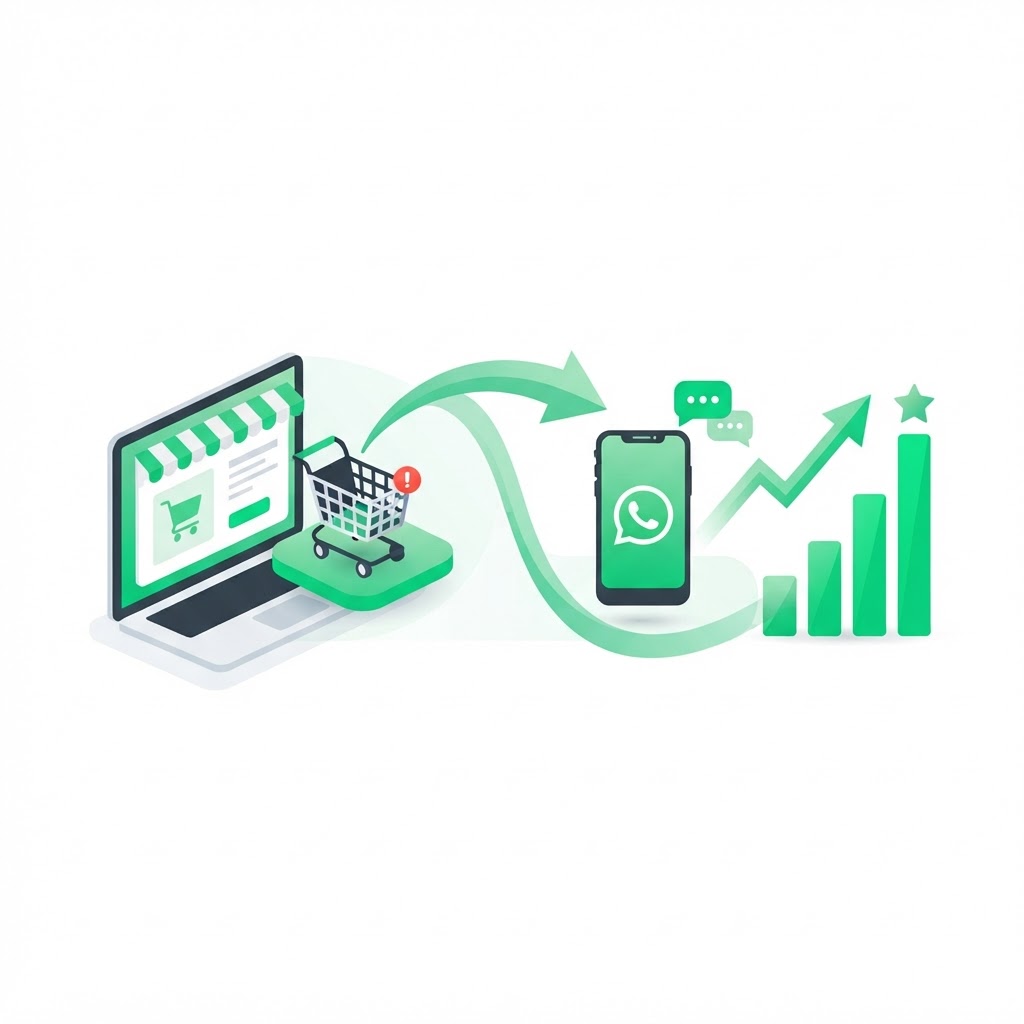
Boosting Conversions: A Case Study on WhatsApp Recovery Strategies
In the competitive landscape of e-commerce, every cart abandonment is a missed opportunity. While traditional email recovery is standard, WhatsApp cart recovery offers dramatically higher open rates and a direct line to your customer's most-used app. In this case study, we explore how a mid-sized fashion retailer used a WhatsApp recovery strategy to transform underperforming checkout flows into a reliable revenue channel.
The Challenge: Abandoned Carts at Checkout
Our client faced a common problem: customers were adding items to their carts but failing to complete the purchase at the final payment stage. Despite having an email sequence in place, the conversion rate for these emails had plateaued at around 2%, and the team had little visibility into why shoppers were dropping off at that exact point.
Several factors were likely contributing to the stall:
- Shipping costs or taxes appearing late in checkout
- Shoppers comparing prices on other tabs and never returning
- Emails landing in spam or promotions folders instead of the inbox
- No real-time way to answer last-minute questions before payment
The store needed a channel that felt immediate and personal, not another email competing in a crowded inbox.
The Solution: Implementing a WhatsApp Recovery Strategy
By integrating CartKeeper, the store transitioned to an automated WhatsApp recovery flow. Unlike email, WhatsApp messages feel conversational and urgent, arriving on the same screen shoppers use to talk to friends and family. The strategy involved a simple, repeatable sequence:
- An immediate notification within 30 minutes of abandonment, reminding the shopper what was left in the cart.
- A follow-up message after 24 hours including a personalized discount code tied to the cart's contents.
- A final check-in message a few days later for higher-value carts, offering help instead of another discount.
This sequencing mattered. The first message capitalizes on fresh intent, the second removes price objections, and the third addresses shoppers who may have had a question nobody answered in time.
Why Timing and Segmentation Matter
Not every abandoned cart deserves the same message. The store segmented shoppers by cart value and product category, sending higher urgency messages to high-value carts and softer reminders to smaller ones. This prevented discount fatigue and kept margins healthy while still recovering revenue that would otherwise have been lost entirely.
Results and Data Analysis
Over a period of three months, the store saw a measurable shift in both engagement and revenue. The open rate for WhatsApp recovery messages reached the 90% range, far above the typical teens-percentage open rate the team had been seeing on email. Replies came within minutes rather than days, which let the support team catch objections while the shopper was still in buying mode.
More importantly, the conversion rate from these messages translated into a meaningful boost in recovered revenue compared to the email-only baseline. The team attributes this to three mechanisms rather than any single trick:
- Visibility: messages are read almost immediately, so the offer is still relevant when the shopper sees it.
- Frictionless return: a direct link returns shoppers straight to their pre-filled cart instead of a generic homepage.
- Two-way conversation: shoppers could ask about sizing, delivery times, or stock directly in the thread instead of abandoning the recovery flow altogether.
The integration of WhatsApp automation for AI agents also gave the store the precision needed to target segments based on cart value, product type, and shopper history, something a static email template could not replicate.
Why WhatsApp Wins Over Email
The key difference is accessibility. WhatsApp is where friends and family communicate, making brand interactions feel more trustworthy and immediate than a marketing email buried among dozens of others. When combined with an automated Shopify or WooCommerce workflow, the friction of the checkout process is removed, allowing customers to resume their purchase with a single tap.
This case also highlights a shift worth noting: recovery is no longer just about reminding someone they left something behind. It is about making it effortless to finish what they started, and answering any lingering question before it becomes a reason to abandon for good. Stores that pair recovery messages with a WhatsApp-based AI agent that answers customer questions in real time tend to see fewer stalled conversations, since shoppers get answers without needing a human on standby.
Applying This Strategy to Your Own Store
If you're a Shopify or WooCommerce owner looking to replicate these results, start by auditing where your current recovery funnel breaks down. A marketing audit covering Google Ads, GA4, and Search Console data can reveal whether the issue is upstream, such as traffic quality or site speed, before you assume messaging alone will fix everything. From there, layering in automated WhatsApp sequences gives you a channel that complements, rather than replaces, your existing email flows.
For developers building custom recovery logic, the underlying WhatsApp middleware used to connect store platforms to messaging APIs is worth exploring before building an integration from scratch. You can also browse more implementation guides and case studies to see how other merchants structured their sequences.
FAQ
How quickly should the first WhatsApp recovery message be sent?
Sending within the first 30 to 60 minutes after abandonment tends to work best, since the shopper's intent is still fresh and they are more likely to recognize the message as relevant rather than intrusive.
Does WhatsApp recovery replace email recovery entirely?
No, the two channels work best together. Email can still handle broader lifecycle messaging, while WhatsApp handles the time-sensitive, high-intent moments right after checkout abandonment.
Is a discount code necessary in every recovery message?
Not always. The first reminder often performs well without any incentive, and reserving discounts for the second or third touch helps protect margins while still giving hesitant shoppers a reason to return.
Ready to turn abandoned carts into recovered revenue with a WhatsApp-first strategy? Visit CartKeeper AI to set up your first automated recovery flow.